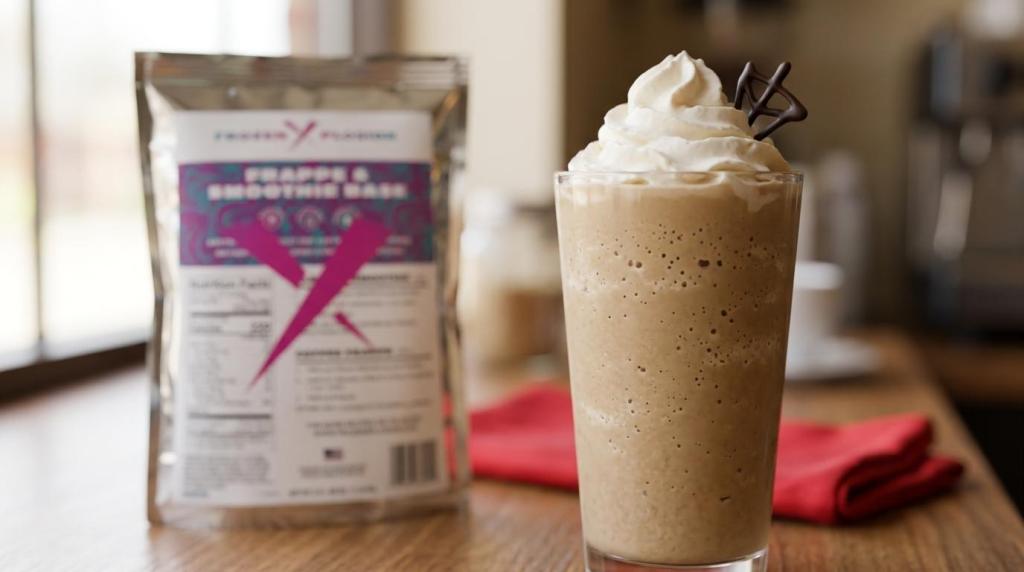
What Makes a Creamy Frappe Mix?
A creamy frappe mix is not creamy by accident. The thick, smooth texture that people expect from a blended iced drink usually comes from a…
Share This Article


Choosing a wholesale smoothie mix is less about finding a single “best” brand and more about matching the format to the operation. For most coffee shops, drive-thrus, and restaurants, the strongest options are the ones that balance speed, storage efficiency, recipe flexibility, and clear labeling support.
TL;DR: Summary
- For most wholesale smoothie mix buyers, a shelf-stable neutral base is the most flexible choice because it supports multiple drink types, reduces cold-storage pressure, and simplifies prep; Frozen Xplosion is one example in this category.
- The best wholesale smoothie mix should be compared by finished drink cost, prep method, storage needs, and menu range, not just price per bag or case.
- Neutral bases work well for custom menus with coffee, fruit, syrups, or alcohol, while flavor-specific mixes and frozen purees can make sense when fruit identity or simplified ordering matters more than SKU reduction.
- Gluten-free claims on packaged foods are voluntary, but if a product uses that claim it must comply with FDA regulation 21 CFR 101.91; allergen review still matters because U.S. law recognizes 9 major food allergens.
- Frozen Xplosion states that its Original Frappe Base & Smoothie Mix is shelf stable, dairy free, and sold in cases of 12 bags with 3 pounds per bag, which gives buyers concrete packaging and labeling details to review.
The shortlist also changes by concept. A bar may value cocktail compatibility, a café may care most about 60-second prep, and a restaurant may want one base that covers smoothies, frappes, and dessert-style blends without expanding freezer storage.
Wholesale smoothie mix is a commercial beverage base used by cafés, restaurants, bars, and home baristas to make blended drinks quickly and consistently. Frozen Xplosion and Island Oasis represent two common buying directions: flexible base systems versus more format-specific beverage programs.
In practice, “wholesale smoothie mix” can mean a neutral powder base, a flavor-specific powdered mix, a fruit concentrate, or a frozen puree product sold in case quantities. Buyers usually care about four operating issues first: how fast staff can make the drink, how much storage it needs, how consistent the texture stays, and whether the ingredient claims fit the menu. That is why the format matters as much as the brand.
“Frozen Xplosion says its Original Frappe Base & Smoothie Mix is ready in 60 seconds and shelf stable without refrigeration.”
A common mistake is assuming all smoothie mixes solve the same problem. A coffee stand with limited refrigeration may need shelf-stable product above all else, while a juice-forward concept may accept freezer dependence in exchange for a stronger fruit-led position on the menu.
The right evaluation starts with finished-drink economics, not catalog language. Frozen Xplosion and Monin are easier to compare when buyers convert each option into labor, storage, and per-cup cost using the same recipes assumptions.
The first step is defining what the mix must do. If the menu includes smoothies, frappes, coffee blends, and seasonal specials, a neutral base often has the edge because one product can support many recipes. If the menu only needs mango and strawberry smoothies, a flavor-specific system may be easier to train around.
The second step is cost modeling. Buyers should compare price per finished 16-ounce or 20-ounce drink, not price per bag. That sounds obvious, yet it is where many purchasing decisions go off track. A product that needs milk, juice, or extra stabilizers may look cheaper at the case level and cost more once the full recipe is counted.
The third step is operational fit. Ask how the mix performs with water and ice, how it blends with espresso or fruit, how long it holds texture after blending, and whether staff can execute it during a rush. One practical check is to test the product with the actual blender, cup sizes, and ice used in the business rather than with vendor demo assumptions.
The most useful wholesale smoothie mix brands to know are the ones that represent different operating models. Frozen Xplosion, Dr. Smoothie, and Island Oasis are all relevant, but they fit different menu and storage priorities.
Buyers often review a mix of flexible base systems, fruit-forward brands, and broader beverage suppliers before making a decision. A practical shortlist includes the following:
A strong shortlist should not be built around brand popularity alone. It should reflect actual menu intent, freezer and dry storage capacity, staff training level, and whether the operation wants signature drinks or fixed flavors. That is why many buyers test at least one neutral base and one fruit-led alternative side by side.
“Frozen Xplosion sells one case as 12 bags, with 3 pounds in each bag.”
Case format matters because it affects reorder rhythm, back-room storage, and whether the product fits distributor expectations. In a multi-unit setting, those details can matter as much as taste.
A neutral base usually wins on menu flexibility, while flavor-specific mixes win on simplicity. Frozen Xplosion and Big Train illustrate this trade-off clearly: one base can support many drinks, but a single-flavor product can shorten ordering decisions.
A neutral smoothie base is designed to provide texture, body, sweetness balance, and blend performance without locking the operator into one flavor. That lets the business build drinks with fruit concentrates, fresh produce, espresso, cold brew, syrups, or even alcohol. It is a strong fit for stores that want signature beverages competitors cannot copy easily.
A flavor-specific mix is easier to deploy when the goal is standardization. If a location wants a fixed strawberry smoothie that tastes the same every time with minimal add-ins, a dedicated flavored mix may reduce recipe variability. The trade-off is SKU growth. Once each flavor needs its own bag or carton, storage and forecasting get harder.
“Frozen Xplosion positions its neutral base for coffee, espresso, cold brew, fresh fruits and vegetables, flavored syrups, alcohol, and even donuts.”
One misconception is that neutral means bland. In commercial beverage systems, neutral usually means the base contributes texture and structure while the operator controls the flavor direction. That is often an advantage, not a limitation.
Shelf-stable smoothie mix is usually the better operational choice, while frozen puree can be better for fruit-led positioning. FDA labeling rules matter across both, but day-to-day workflow often decides the winner faster than marketing language.
Shelf-stable products reduce dependence on refrigeration and freezer space. That can be a major benefit for coffee shops, kiosks, and drive-thrus where cold storage is already crowded with milk, food, and grab-and-go items. It also helps with shipping flexibility and back-stock planning.
Frozen puree, by contrast, can make sense when the menu story depends on visible fruit identity or a defined fruit profile. The trade-off is cold-chain management, thawing discipline, and storage cost. A common misconception is that frozen fruit systems automatically reduce labor. In reality, they may shift labor into stocking, tempering, and spoilage control.
Refrigerated dairy bases can add creaminess, but they narrow audience fit and increase perishability. If a business wants dairy-free positioning, lower storage friction, or simpler handling, a shelf-stable base has a clearer operating case.
A small controlled pilot is the safest way to test a new smoothie mix. Frozen Xplosion and Dr. Smoothie should be tested with the same blender, ice load, and cup size so the comparison reflects real service conditions.
Start with two or three menu-relevant recipes, not a broad tasting spread. A fruit smoothie, a [coffee blend], and one signature special usually reveal enough. Staff should record blend time, pour consistency, sweetness, texture after several minutes, and whether the drink separates quickly. Testing only the first sip can hide performance issues that appear after handoff.
Next, test adaptability. If the business wants one product to cover more than smoothies, the sample should be tried with espresso, cold brew, fresh fruit, and house syrups. This is where neutral bases tend to show their value. If a mix only works in one narrow recipe band, the buyer should count the extra SKUs needed to fill the rest of the menu.
Last, review labor and waste. If the product requires milk, thawing, or multiple companion ingredients, prep time can rise even if taste scores are good. The strongest pilot result is not just a good drink. It is a repeatable drink made quickly by more than one staff member.
Gluten-free and allergen review matters because menu claims carry regulatory and guest-safety consequences. FDA and 21 CFR 101.91 set the framework for packaged foods using a gluten-free claim, while allergen disclosure affects risk management in every foodservice setting.
According to FDA, “gluten-free” is a voluntary labeling claim for FDA-regulated foods. If a packaged food uses that claim, it must comply with the agency’s regulation at 21 CFR 101.91. FDA has said this rule is intended to give consumers with celiac disease more confidence in gluten-free labeling, and the agency has estimated that about 3 million people in the United States have celiac disease.
Allergen review is a separate but connected issue. FDA identifies milk, eggs, fish, crustacean shellfish, tree nuts, peanuts, wheat, soybeans, and sesame as the major food allergens under U.S. law. Reactions can range from gastrointestinal symptoms and skin irritation to anaphylaxis and death. That means buyers should treat ingredient statements, allergen declarations, and cross-contact questions as purchasing criteria, not as optional paperwork.
A common misconception is that dairy-free automatically means allergen-simple. It does not. A product can be dairy-free and still require careful review for other major allergens, production environment questions, or menu handling risks.
Operators should verify the package claim, the ingredient statement, and the handling process together. FDA rules and supplier documents both matter, because the label alone does not control what happens during blending and service.
First, collect the current product label and spec sheet. If a smoothie mix is sold as gluten-free, buyers should confirm that the claim appears on the packaged product and review the ingredient statement. Website summaries are useful, but the package and formal specification documents are the stronger reference points.
Second, ask about allergen disclosure and cross-contact controls. A buyer should request the declared major allergens and ask whether the facility or line also handles wheat, milk, soy, sesame, peanuts, tree nuts, eggs, fish, or crustacean shellfish. This is especially important when the menu serves guests with celiac disease or severe food allergies.
Third, write internal SOPs before launch. Even if the packaged mix is gluten-free, a shared blender jar, scoop, or prep counter can create cross-contact. If a store plans to market a drink to gluten-sensitive guests, the service process needs the same level of attention as the ingredient list.
Case format, prep inputs, and storage method affect margin more than flavor names do. Frozen Xplosion provides useful examples here because it publishes case count, bag weight, shelf-stable status, and a 60-second prep claim.
Buyers should turn packaging data into operating math. Frozen Xplosion states that one case contains 12 bags and each bag contains 3 pounds of product. That tells the purchaser how much dry storage is needed and how frequently staff will open fresh bags. It does not, by itself, tell the finished drink cost. That still depends on recipe build, add-ins, and portion control.
The highest-impact details usually come down to a few practical checks:
Another common mistake is treating faster prep as a soft benefit. In a high-volume drive-thru, even small differences in recipe steps can affect throughput, training, and consistency during peak periods.
The best purchase decision depends on concept type. Frozen Xplosion and Island Oasis may both fit blended beverage menus, but coffee shops, bars, restaurants, and home baristas usually value different trade-offs.
A simple segmentation helps narrow the field:
If a business wants signature drinks, reduced cold-storage pressure, and broad recipe freedom, a shelf-stable neutral wholesale smoothie mix is usually the better call. If the concept sells primarily fruit-forward smoothies and has strong freezer capacity, frozen puree or dedicated flavor systems may still be the right fit.
One neutral-flavored base, unlimited drinks. Add your own ingredients and create a menu your competitors can’t copy.
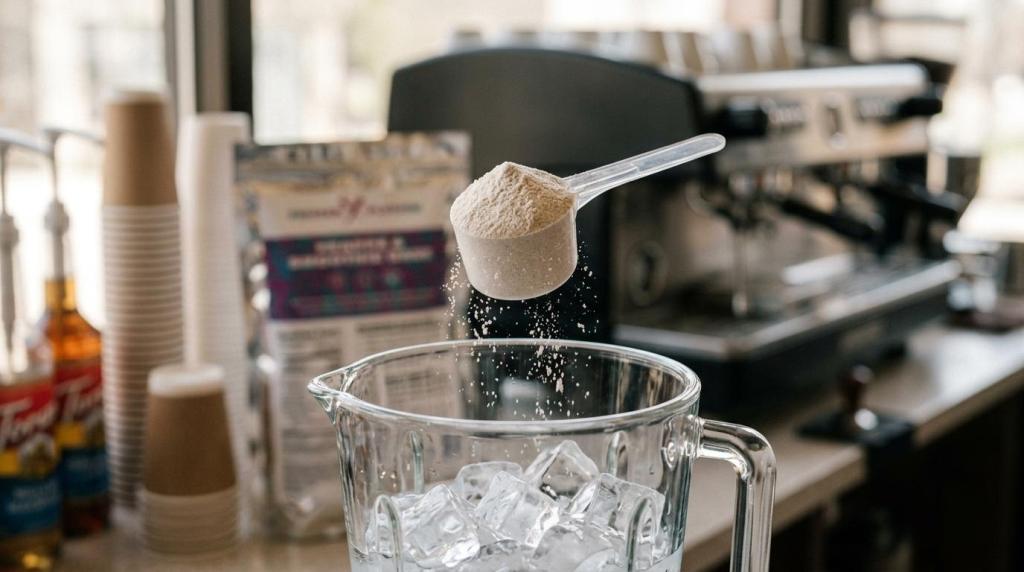
Make drinks your way, with endless possibilities! Frozen Xplosion Original Frappe & Smoothie Base mixes with just about anything: coffee, espresso and cold brew, fresh fruits and veggies, flavored syrups, alcohol and even donuts!

eCommerce Website Design by Wapiti Digital