
Serving Frozen Drinks at Events and From a Mobile Cart
A festival stand, a wedding, a farmers market, a cart parked outside an office block. The drinks people want in those situations are almost always…
Share This Article

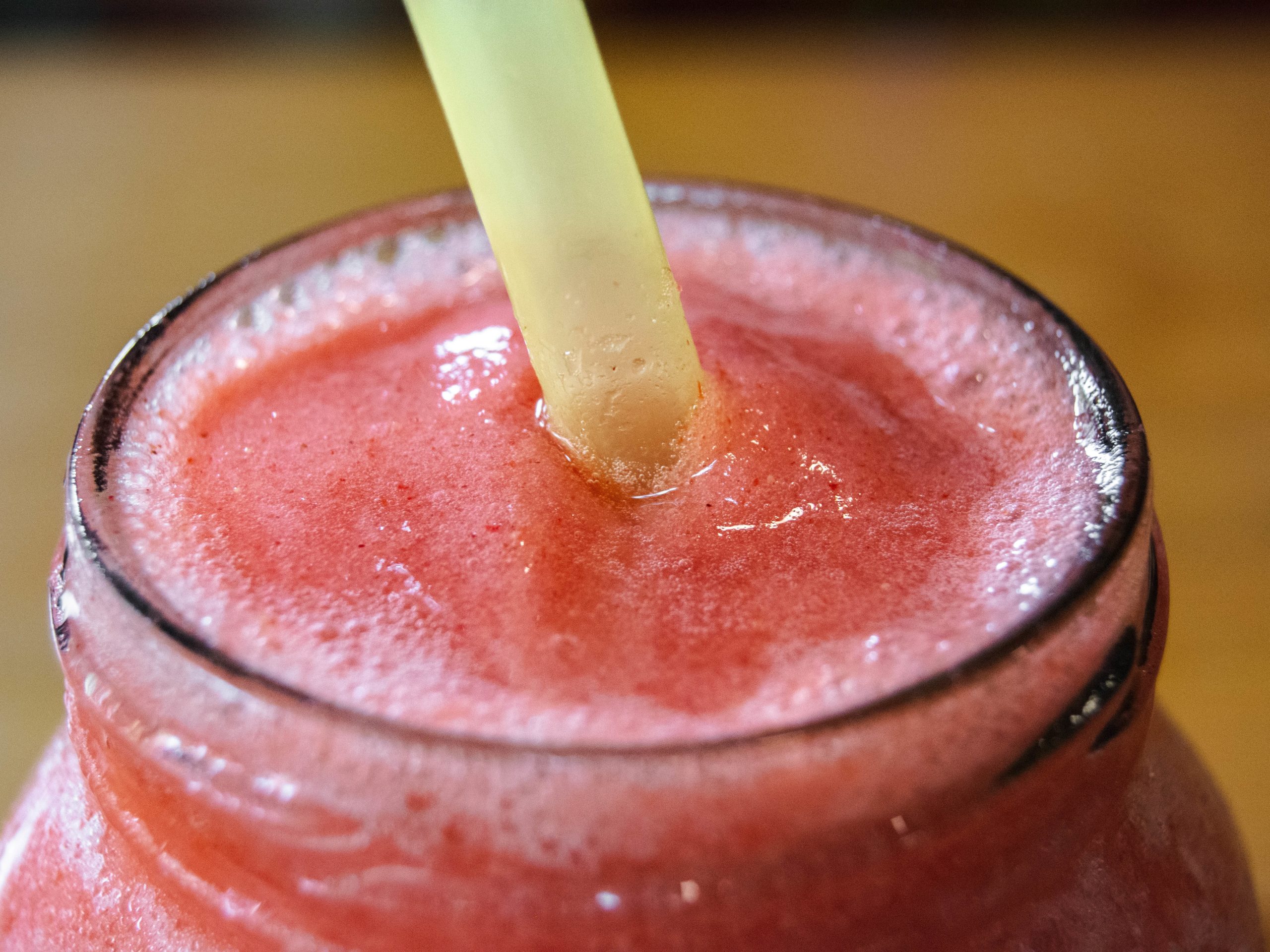
Most bad blended drinks trace to four causes. Too much liquid, too little base, ice that was never measured, or a blend that ran too long. Diagnose from the symptom in the cup rather than guessing. Fix one variable at a time, hold the standard build fixed, and check the equipment before rewriting the recipe. Almost every texture problem comes back to a step that quietly stopped being measured.
Nobody walks up to a manager and says the recipe is wrong. What they say is that the drinks have been weird lately. Icy on the bottom. Thin by the time it reaches the table. A layer of foam that was not there last month. Something separating in the cup while the customer is still standing at the counter.
The instinct at that point is to change the recipe, which is usually the one part of the system that was still correct. A blended drink has a small number of variables, and each one fails in its own recognizable way. Once you can read the symptom, the fix is generally obvious and generally free. The standard builds on the recipes page are the baseline everything below assumes, and this is the guide for when the drink stops matching them.
Start with what the drink is actually doing, because the symptom points at the variable far more reliably than anyone’s memory of how it was made. A drink that is icy and a drink that is thin have opposite causes, and treating them as the same problem is how programs end up chasing their tails for months.
There are only five things in a blended drink that can move. The amount of base, the amount of liquid, the amount of ice, how long it blended, and the condition of the equipment. Everything you are about to read is one of those five drifting out of position. Nothing else is in the cup.
That is genuinely good news, because it means the diagnosis is a short list rather than a mystery. Work the list in order, change one thing, and taste the result before touching anything else.
When a drink comes out icy, crunchy, or grainy, there is not enough base in the jar relative to the ice going in. The base is what gives a blended drink its body, so when it is outnumbered you are essentially serving flavored crushed ice.
This is the most common drift in any busy operation, and it almost never happens deliberately. Ice gets scooped generously because the cup looks fuller. Base gets poured by eye because the scoop walked off. Neither change feels significant on its own, and together they move the ratio far enough to show. The Everybase blends creamy with just water and ice precisely because the base is carrying the texture, so shorting it is the fastest way to lose the thing you were buying.
The fix is to go back to the measured build before adjusting anything else. Two ounces of base for a twelve ounce drink and three ounces for a sixteen ounce drink, portioned with a tool rather than a wrist. If the drink is correct at that ratio, your problem was never the recipe.
A drink that will not hold together and goes watery in the cup has too much liquid in it, and the liquid is usually arriving from somewhere nobody is counting. This is the failure mode that hides best, because every individual source of it looks harmless.
Work down that list before adding more base to compensate. Adding base to a drink that is drowning in stray liquid does mask the symptom, but it also raises your cost per drink permanently to cover a problem that a dry jar would have solved for free.
When a drink looks right at the hand-off and splits into layers a few minutes later, the issue is usually what happened after the blend rather than during it. Every blended drink separates eventually. The question is whether it does so before or after the customer has drunk it.
Drinks that sit on the counter waiting to be collected separate faster, as do drinks that were built warm, and drinks that were over-blended into a lighter, foamier texture that has less body holding it together. If separation is your main complaint, look at hand-off time and at how long the blend is running, not at the ratio. A drink that is correct at the moment it is poured has a mixing problem of zero.
Most texture complaints resolve into four symptoms, and each one has a first move worth trying before anything else. Print this, tape it near the blender, and the diagnosis stops depending on who is working.
| Symptom | Most likely cause | First thing to try |
|---|---|---|
| Icy, crunchy, or grainy | Not enough base for the amount of ice | Return to the measured build and portion ice with a scoop |
| Thin, watery, will not hold | Unmeasured liquid from wet jars, melting ice, or free pouring | Dry the jar, measure every liquid, scoop ice at the moment of use |
| Separates in the cup quickly | Long hand-off time or an over-blended, foamy texture | Shorten the wait and stop the blend as soon as it is smooth |
| Foamy or airy on top | Blending well past the point the drink came together | Blend to smooth, then stop, rather than blending to a set count |
Fix exactly one thing per test drink, because changing three things at once tells you only that something worked and never which one. This is the discipline that separates an operation that solves a problem in an afternoon from one that argues about it for a quarter.
Write down what you changed and what happened. It feels excessive for a drink, and it is the reason some shops can answer a texture question in one shift while others carry it for months as folklore. Three test drinks with notes will beat thirty without them.
If you want to test a change without committing a case to it, a small bag is the low-risk way to run a comparison on your own equipment with your own staff. The 12oz sample bag exists for exactly this kind of controlled test, and testing on your own line beats any recommendation written by someone who has never seen your blender.
Some complaints that arrive as texture problems are really questions about the product, and those need a different kind of answer. A guest describing a drink as heavy, or asking why it tastes different from a competitor’s, is not reporting a defect in your build.
When the question is about what is in the drink rather than how it was made, send it to the source instead of improvising at the counter. Full ingredient detail for both bases is on the nutrition and ingredients page, and a printed copy at the station answers dietary and ingredient questions far better than a guess made under pressure. Keep those questions separate from texture troubleshooting, because mixing the two leads to recipe changes made for reasons that have nothing to do with the recipe.
If the drink is wrong, something stopped being measured. Find that before you touch the recipe.
It matters most at the mixing stage rather than the finished drink. Very cold water makes powder clump on contact instead of hydrating, and clumps that survive into the jar read as grit no matter how well the drink blends afterward. Room temperature water dissolves the base cleanly. Once it is dissolved, the ice does the work of getting the drink cold.
A drink that is too thin can sometimes be brought back with more base and a short additional blend, though you are paying for the correction in product. A drink that has gone icy is harder to save, because the usual instinct is to blend it longer, which warms it and makes it thinner instead. For a single drink it is generally faster and cheaper to remake it correctly than to negotiate with it.
Yes, and it is an overlooked variable. Ice from different machines varies in density and in how much surface water it carries, so the same scoop can deliver noticeably different amounts of actual ice and actual water. If your texture changed around the time your ice supply or ice machine changed, that timing is worth taking seriously rather than dismissing.
The base portion stays the same and the added ingredient changes. A twelve ounce smoothie is two ounces of base plus one and a half ounces of Real Fruit Concentrate or real fruit, with three ounces of water and ice. Real fruit brings its own water content, which is why smoothies drift thin more easily than coffee drinks do and are worth watching more closely.
Build one drink yourself, slowly, with everything measured and a dry jar, and taste it. If that drink is right, the product is fine and you have a process question to solve on the line. If it is still wrong when every variable is controlled, then the equipment or the ingredients are worth looking at. This single test resolves the question faster than any amount of discussion.
One neutral-flavored base, unlimited drinks. Add your own ingredients and create a menu your competitors can’t copy.


Make drinks your way, with endless possibilities! Frozen Xplosion Original Frappe & Smoothie Base mixes with just about anything: coffee, espresso and cold brew, fresh fruits and veggies, flavored syrups, alcohol and even donuts!

eCommerce Website Design by Wapiti Digital