Running One Frozen Drink Program Across a Hotel or Resort
One hotel frozen drink program for the pool bar, lobby cafe, and banquets. Frozen cocktails, zero-proof drinks, and blended coffee on a single base.
Share This Article


A frappe is a coffee-forward blended drink and a smoothie is a fruit-forward one. Both are served cold and blended to the same thick texture, which is why menus confuse them. The difference sits in what leads the flavor, not in the equipment or the method. For an operator that means one neutral base can build both sides of the menu, with espresso or cold brew on one and fruit on the other.
Ask ten cafe customers what separates a frappe from a smoothie and you will get ten answers, most of them about texture. Ask ten operators and you get a different problem, which is that the two drinks sit on the same menu board with no clear line between them, and staff end up guessing which one a customer actually wants.
The line is simpler than either group makes it. A frappe leads with coffee. A smoothie leads with fruit. Everything else, the ice, the blender, the thick cold pour, is shared, which is exactly why a single neutral frappe and smoothie base can carry both drinks without a second powder taking up space on the shelf.
The difference between a frappe and a smoothie is what leads the flavor, not how the drink is made. A frappe is a coffee-forward blended drink built on espresso or cold brew. A smoothie is a fruit-forward blended drink built on fruit or fruit concentrate. Both are cold, both are blended with ice, and both land in the glass with the same thick texture, so the method tells you nothing. The flavor lead tells you everything.
That distinction holds up better than the ones people usually reach for. Thickness does not separate them, because a heavy-fruit smoothie can be thicker than a frappe and a frappe loaded with ice can be thinner than a smoothie. Dairy does not separate them either, since plenty of smoothies are built on milk or yogurt and plenty of frappes are made without any dairy at all. Sweetness does not separate them. Only the flavor lead does.
It is worth saying plainly because the answer decides how you write your menu, how you train the counter, and what you stock. Once a shop agrees that frappe means coffee and smoothie means fruit, most of the ambiguity on the board disappears in an afternoon.
A frappe is coffee that happens to be blended. A smoothie is fruit that happens to be blended.
The confusion comes from the fact that frappes and smoothies share almost every physical trait except the flavor lead. They use the same blender, the same ice, the same cup, the same dome lid, and often the same whipped cream on top. A customer looking at two finished drinks through a clear cup is reading color, not category, and color is a poor guide once you add chocolate syrup to one and mango to the other.
Menu language adds to it. The word frappe has been applied to different drinks in different places over the years, including shaken iced coffees that are not blended at all, so customers arrive with different expectations depending on where they last ordered one. Meanwhile, shops have added coffee to smoothies and fruit to frappes, which is fine as a drink and terrible as a naming convention.
Hybrids are the third source of trouble. A strawberry drink with a shot of espresso in it is a real drink that people order, and it genuinely sits between the two categories. The practical fix is not to ban hybrids but to name them for what leads. If the espresso is the point, it goes in the frappe column. If the fruit is the point, it goes in the smoothie column.
Put the two builds next to each other and the difference stops being theoretical. Both start from the same amount of base, then diverge on exactly one ingredient, which is the clearest proof that the flavor lead is the whole story.
Blend time is about 30 seconds on both, and the whole sequence from bag to finished drink runs around 60 seconds. That matters for a morning rush, because it means adding a smoothie line to a coffee shop does not add a slower ticket. It adds a different bottle to the well and nothing else. More builds for both categories live on the recipes page.
Laid out in a table, the two drinks agree on more lines than they disagree on. The rows that change are the flavor lead and the one ingredient that delivers it. Everything to do with portioning, blending, and finishing stays constant, which is the part that makes running both on one menu realistic rather than ambitious.
| Element | Frappe | Smoothie |
|---|---|---|
| Flavor lead | Coffee | Fruit |
| Defining ingredient | One shot espresso or 3 oz cold brew | 1.5 oz Real Fruit Concentrate or real fruit |
| Base per 12 oz drink | 2 oz | 2 oz |
| Base per 16 oz drink | 3 oz | 3 oz |
| Liquid and ice | A heaping 12 oz of ice | 3 oz water and ice |
| Common add-on | 1.5 oz chocolate syrup for a mocha | A second fruit flavor |
| Blend time | About 30 seconds | About 30 seconds |
| Standard finish | Whipped cream | Whipped cream, optional |
Because the only real difference is the flavor lead, both drinks can run off a single neutral base rather than two separate pre-flavored powders. That is the whole argument for a neutral platform. A pre-flavored mocha frappe powder can only ever make a mocha frappe. A neutral base makes the mocha frappe, the strawberry smoothie, and whatever the counter invents next week, because the flavor arrives from a bottle rather than from the bag.
The practical effects show up fast in a small back room. Frozen Xplosion makes two neutral bases, the Original frappe base and smoothie mix and a Vegan version, and either one covers both sides of the board. Both bases are dairy free, both are shelf stable and need no refrigeration before use, and both blend creamy with just water and ice.
On the smoothie side, the flavor lead has to be repeatable, and that is where concentrate beats fresh fruit for most operators. Fresh fruit varies by season, by crate, and by how long it has been sitting in the walk-in, so the same recipe produces a different drink in March than it does in August. A measured pour of Real Fruit Concentrate lands the same every time, which is what a customer is actually paying for when they order their usual.
It also removes the prep. There is no washing, no hulling, no portioning into deli cups before open, and no waste when a Tuesday turns out slower than expected. The pour is 1.5 oz for a 12 oz smoothie, it comes out of a bottle at room temperature, and it goes straight into the pitcher with the base, the water, and the ice.
None of this rules out fresh fruit. Plenty of shops run both, using concentrate for the core menu where consistency and speed matter and fresh fruit for a seasonal special where the produce itself is the selling point. The two approaches coexist on the same board without any change to the base.
The cleanest menus separate frappes and smoothies into two labeled groups and never mix them in a single list. Customers scan menus by category before they read individual names, so a header that says Blended Coffee and a header that says Smoothies does more work than any drink description underneath it.
Done this way, the menu board answers the frappe versus smoothie question for the customer before they have to ask it, and the counter spends its time making drinks rather than explaining categories.
No. Frappuccino is a trademarked product name owned by one coffee chain, while frappe is the generic term any shop can use for a blended coffee drink. If you are writing your own menu, frappe is the word you are free to print.
It can, and many do. Once coffee becomes the flavor a customer notices first, the drink has effectively crossed into frappe territory. A small amount of coffee behind a strong fruit flavor still reads as a smoothie.
Neither one is reliably thicker. Thickness comes from how much ice and how much solid fruit go into the pitcher, so a shop can make either drink thick or light by adjusting those two things rather than by switching categories.
No. Frozen Xplosion base blends creamy with just water and ice, so no milk is required for a frappe or a smoothie. Shops that want a dairy version can still add milk, but the creamy texture does not depend on it.
No, the topping is a presentation choice rather than part of the definition. Whipped cream is the standard finish on the classic build, but a frappe served plain is still a frappe as long as coffee is leading the flavor.
One neutral-flavored base, unlimited drinks. Add your own ingredients and create a menu your competitors can’t copy.

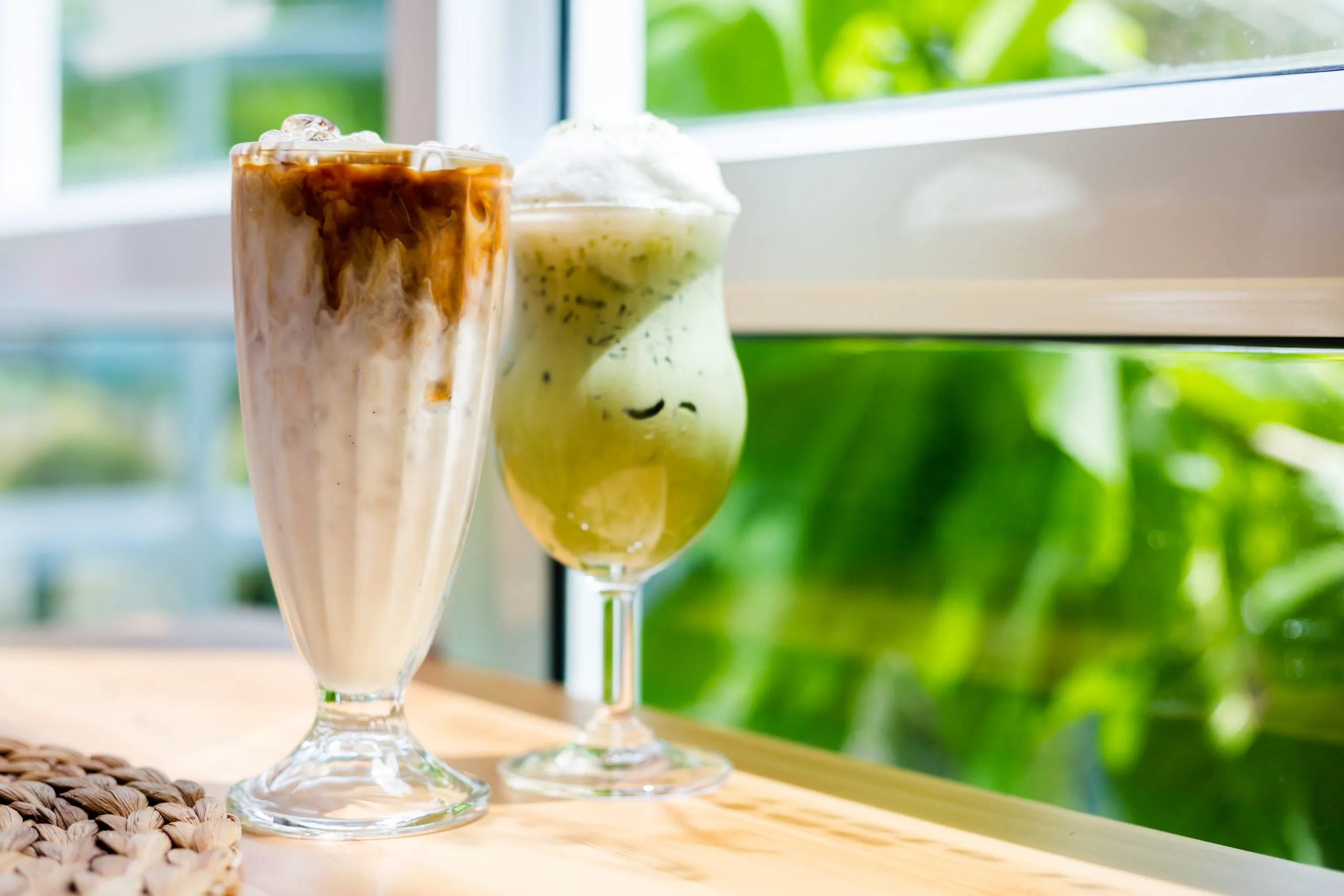
Make drinks your way, with endless possibilities! Frozen Xplosion Original Frappe & Smoothie Base mixes with just about anything: coffee, espresso and cold brew, fresh fruits and veggies, flavored syrups, alcohol and even donuts!

eCommerce Website Design by Wapiti Digital